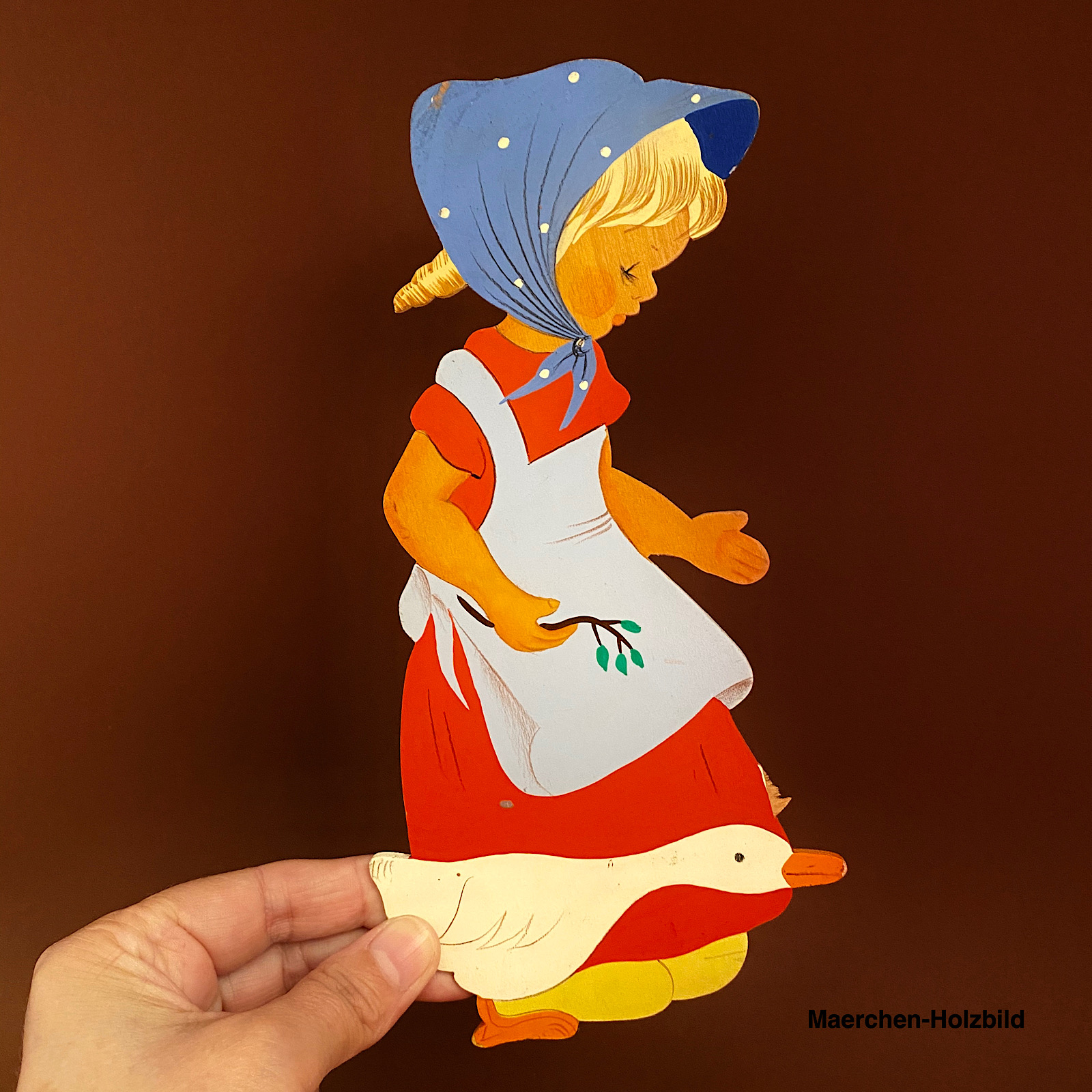
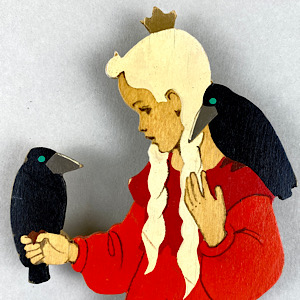
1960er Märchenholzbild German Wall Figure Ravi-Kunst Gänsemagd 22 cm

1960er Ravi-Kunst: Späte Gänsemagd mit großem Kopf, Handbemalt 22 cm [EN] Goose Girl with Big Head

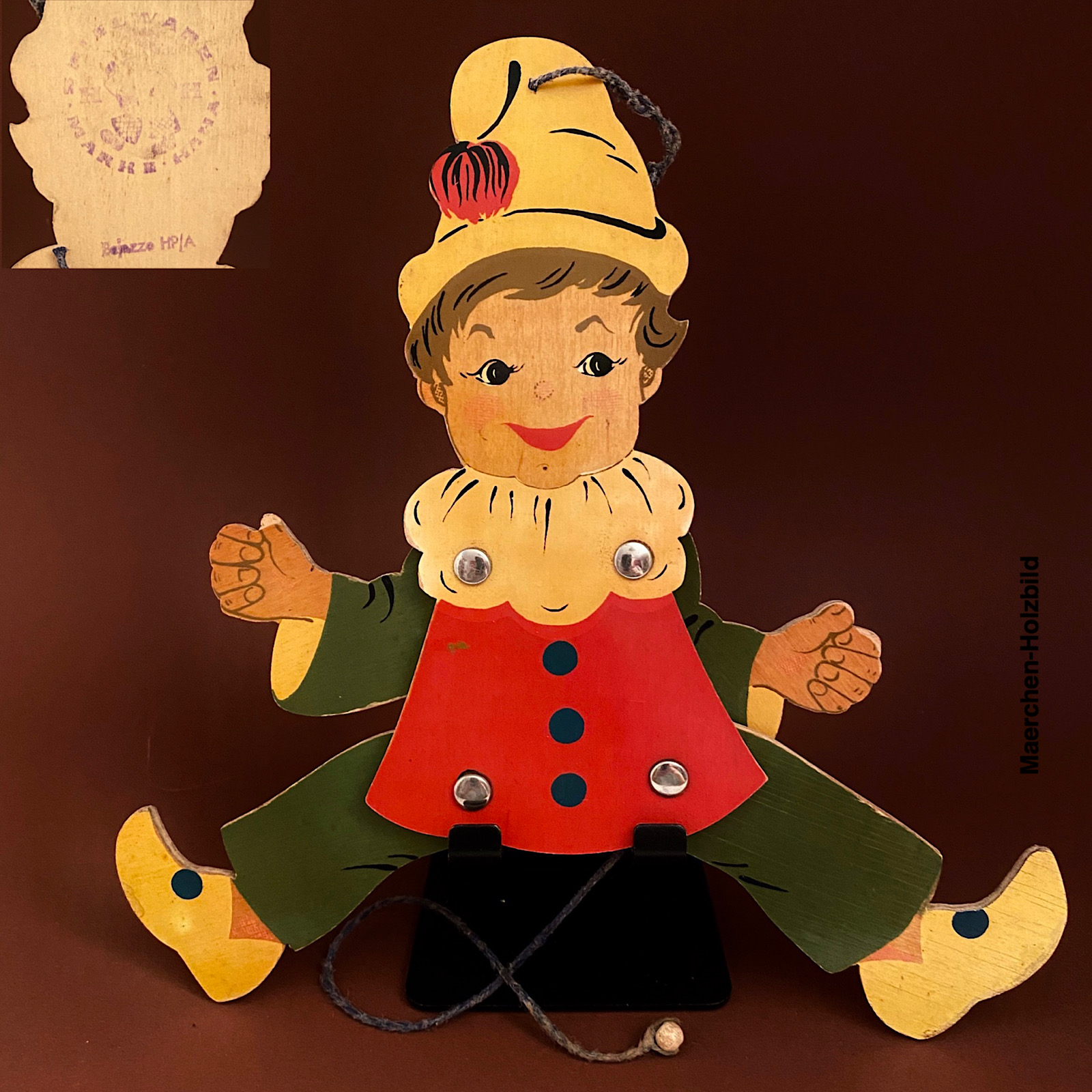
1960er Hampelmann German Wall Figure Haha Hamburg Harlekin 23 cm

1960er „Spielwaren Marke HaHa“: Rüschenkragen-Harlekin „Bajazzo“, Design Ravi-Kunst (?), 23 cm, Hampelmann 🇬🇧 Vintage “Spielwaren Marke HaHa”: Ruffled Collar Harlequin “Bajazzo,” Design Ravi-Kunst (?), 23 cm, Jumping Jack

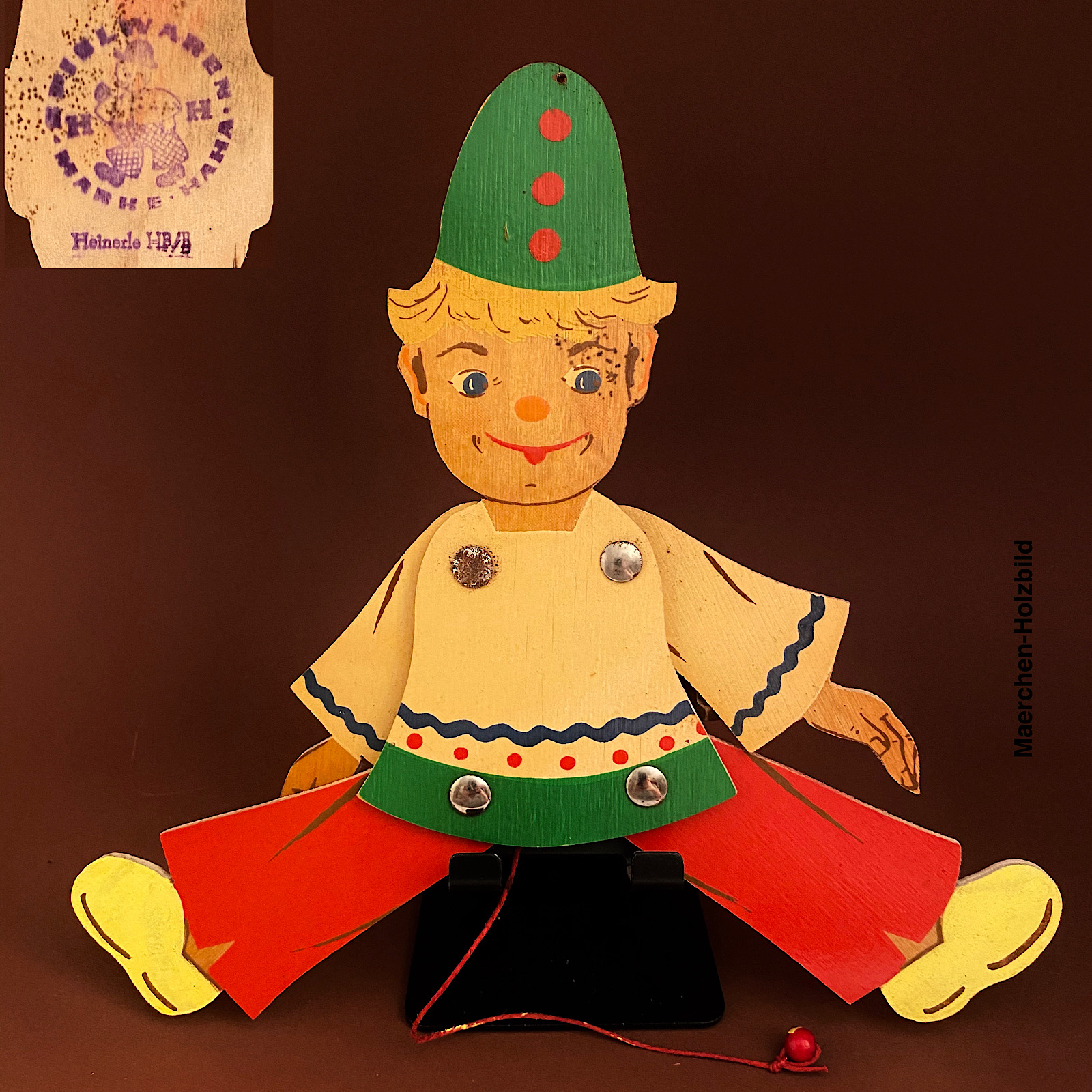
1960er Hampelmann German Wall Figure Haha Hamburg Kind 25 cm

1960er „Spielwaren Marke HaHa“: Harlekin „Heinerle“, Ravi-Kunst-Design (?), 25 cm Hampelmann 🇬🇧 Vintage “Spielwaren Marke HaHa”: Harlequin “Heinerle,” Ravi-Kunst Design (?), 25 cm, Jumping Jack

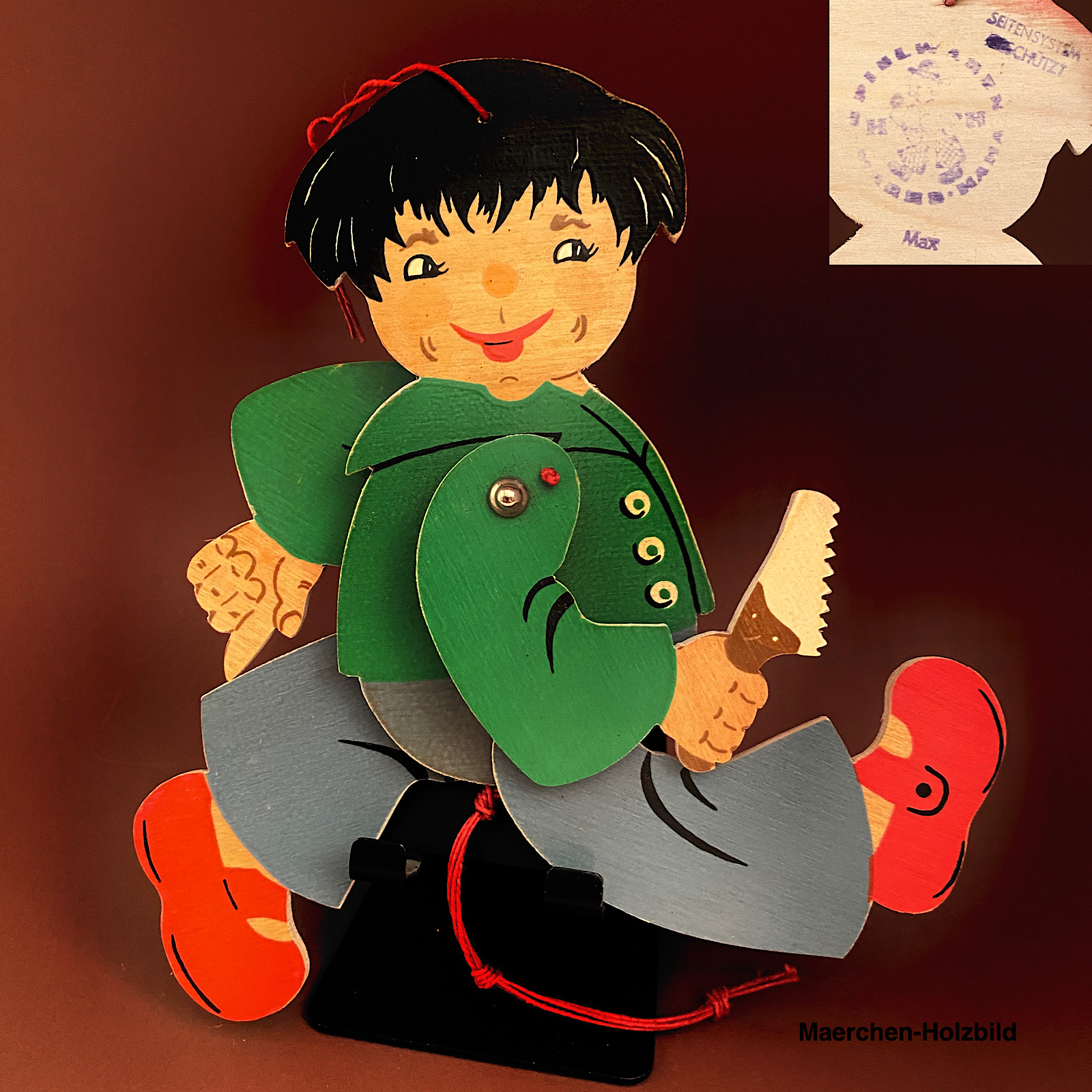
1960er Hampelmann German Wall Figure Haha Hamburg Max Moritz 22 cm

1960er „HAHA Der schreitende Hampelmann“: Max ohne Moritz mit Säge, 22 cm, Hampelmann 🇬🇧 Vintage “HAHA The Striding Jumping Jack”: Max without Moritz with Saw, 22 cm, Jumping Jack

HAHA, NAME: Der Hersteller Haha hat vermutlich in den 1950er und 1960er Jahren seine Holzwaren hergestellt, zum Beispiel Kindermesslatten und Schlüsselbretter, vor allem aber Hampelmänner, allen voran „Der schreitende Hampelmann.“ Der häufigste Rückseiten-Stempel zeigt einen lustigen Clown, der rechts und links neben ihm jeweils den Buchstaben „H“ stehen hat. Um den Clown herum steht kreisförmig Folgendes geschrieben: „Spielwaren Marke Haha“. Der Firmenname „Haha“ bezieht sich offenbar einerseits auf den Herstellungsort Hamburg (deshalb auch das „HH“ neben dem Clown, das für „Hansestadt Hamburg“ steht). Andererseits könnte das „Haha“ zusätzlich für „Hamburger Hampelmänner“ stehen und sollte wohl außerdem andeuten, dass es sich um sehr lustige Motive handelt.

🇬🇧 HAHA, NAME: The manufacturer Haha probably produced their wooden toys in the 1950s and 1960s, for example children’s measuring sticks and key racks, but above all jumping jacks, especially “Der schreitende Hampelmann” (the walking jumping jack). The most common stamp on the back shows a funny clown with the letter “H” on either side of him. The following is written in a circle around the clown: “Spielwaren Marke Haha” (toys brand Haha). On the one hand, the company name “Haha” probably refers to the place of production in Hamburg (hence the “HH” next to the clown, which stands for “Hanseatic City of Hamburg”). On the other hand, the “Haha” most likely also stands for “Hamburger Hampelmänner” (Hamburg Jumping Jacks) and is also intended to indicate that they produced very funny motifs. (Buch/25)

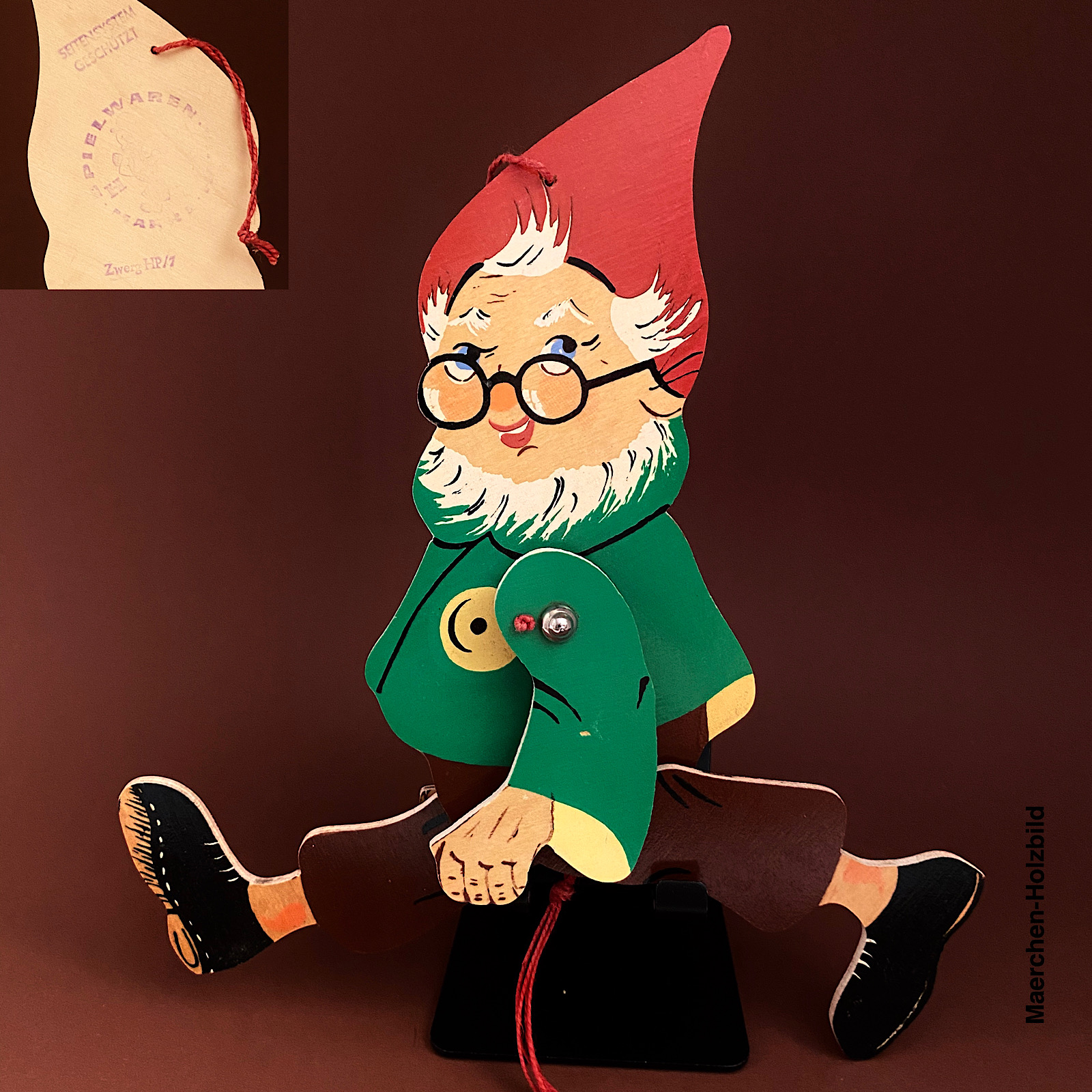
1960er Hampelmann German Wall Figure Haha Hamburg Zwerg 26 cm

1960er „HAHA Der schreitende Hampelmann“: Laufender Gartenzwerg mit Brille, 26 cm 🇬🇧 Vintage “HAHA The Striding Jumping Jack”: Walking Garden Gnome with Glasses, 26 cm

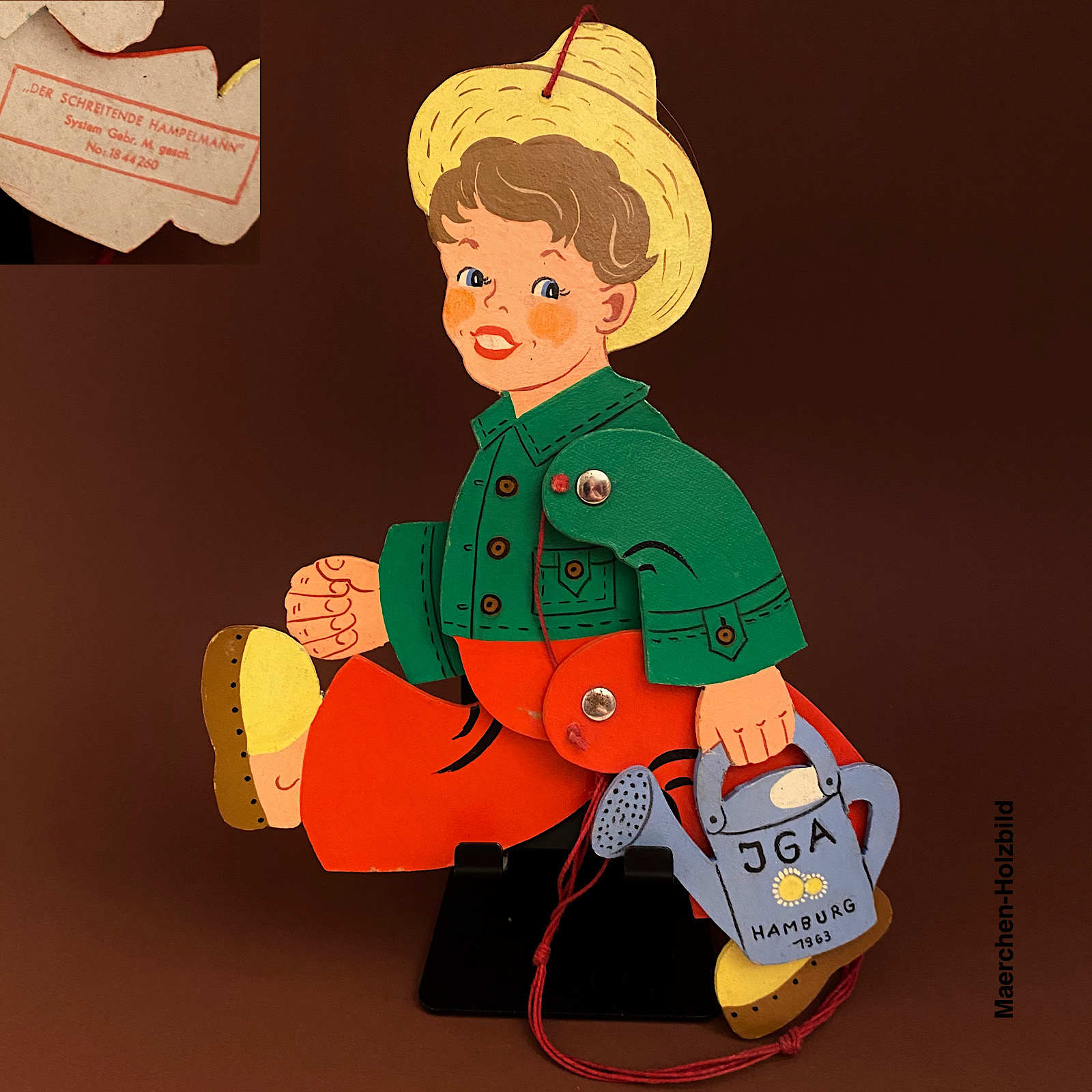
1963 Hampelmann German Wall Figure Haha Hamburg Kind

HaHa mit Aufschrift „IGA Hamburg 1963“: Gießkannen-Junge, Werbung für Bundesgartenschau, Pappe-Hampelmann 🇬🇧 HaHa Inscribed “IGA Hamburg 1963”: Watering Can Boy, Advertisement for Midcentury Federal Garden Exhibition, Cardboard Jumping Jack
"”

HAHA, GESCHÜTZTES SYSTEM: Der Hersteller „Haha“ aus Hamburg (auch “HH” geschrieben) hat vermutlich in den 1950er und 1960er Jahren seine Holzwaren hergestellt. Die Spezialität von Haha war „Der schreitende Hampelmann“; ein geschütztes System, das ich bisher auch nur von den Figuren dieses Herstellers kenne. Die Arme und Beine sind jeweils in drei Holzschichten mit dem Rumpf verbunden, mit insgesamt nur zwei Metallnieten in der Mitte, so dass man eine Art Gehbewegung sehen kann, wenn am Band gezogen wird. Die „Schreitenden Hampelmänner“ waren in der Regel aus Holz, es gab jedoch auch Pappe-Figuren, zum Beispiel der filigrane Gießkannen-Junge, der offenbar speziell für die Internationale Gartenschau Hamburg 1963 (damals IGA) als Werbung hergestellt wurde und den man vermutlich auch als Andenken kaufen konnte.

🇬🇧 HAHA, PROTECTED DESIGN: The old German manufacturer “Haha” from Hamburg (also written HH) produced their wood products most likely in the 1950s and 1960s. Haha’s specialty was “Der schreitende Hampelmann” (the walking jumping jack)–a protected design that I have only ever seen in figures from this manufacturer. The arms and legs are each connected to the torso in three layers of wood, with a total of only two metal rivets in the middle, so that you can see a kind of walking movement when the string is pulled. Most of the “walking jumping jacks” are made of wood, but I also know cardboard figures, for example the Watering Can Boy, which was made specifically for advertising at the Hamburg International Garden Show in 1963 (then IGA) and which you could probably also buy as a souvenir. (Buch/25)
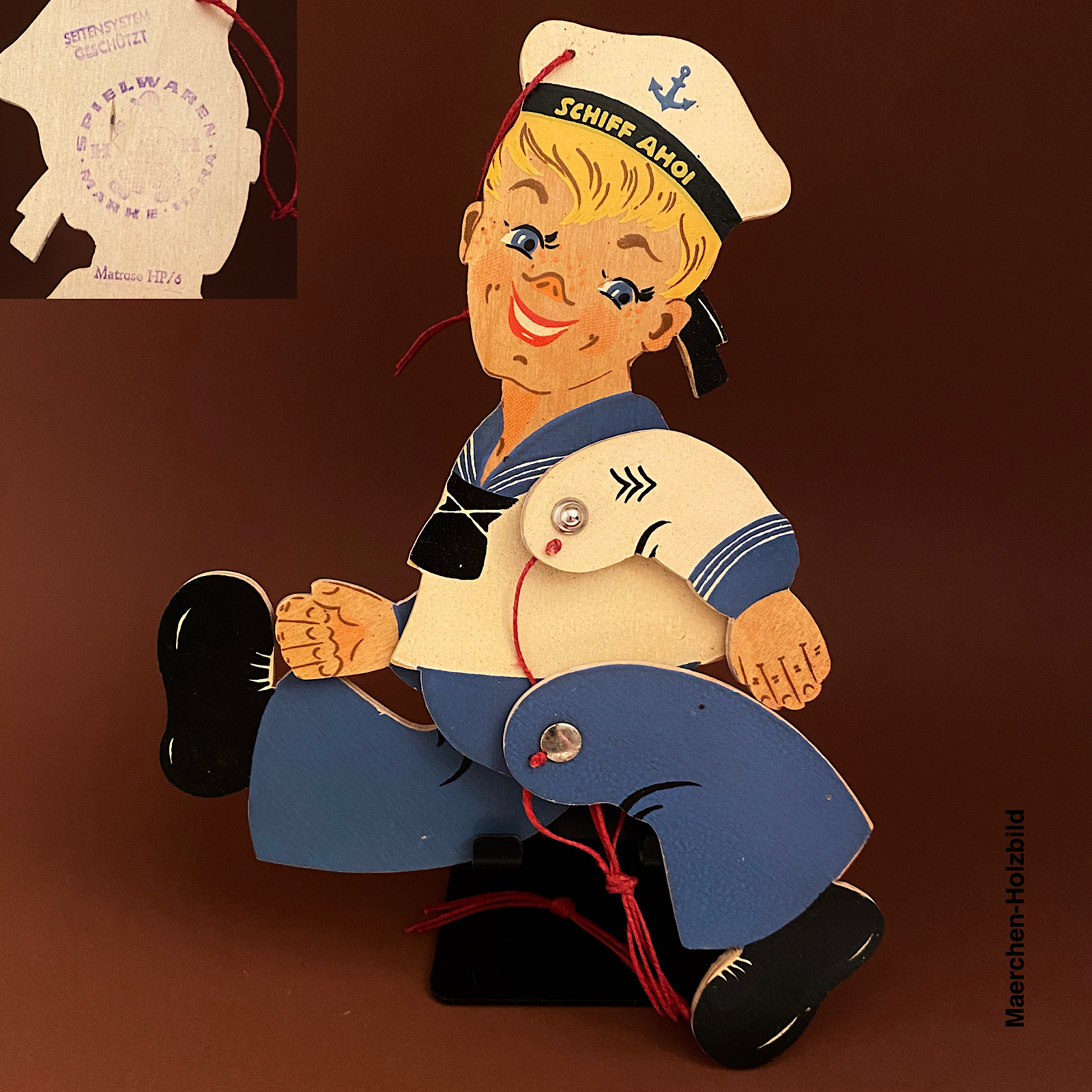
1960er Hampelmann German Wall Figure Haha Hamburg Kind 24 cm

1960er „HaHa Der schreitende Hampelmann“: Fröhlicher Matrose mit „Schiff Ahoi“-Mütze, 24 cm 🇬🇧 Vintage “HaHa The Striding Jumping Jack”: Cheerful Sailor with “Ship Ahoy” Cap, 24 cm

HAHA, NAME: Der Hersteller Haha hat vermutlich in den 1950er und 1960er Jahren seine Holzwaren hergestellt, zum Beispiel Kindermesslatten und Schlüsselbretter, vor allem aber Hampelmänner, allen voran „Der schreitende Hampelmann.“ Der häufigste Rückseiten-Stempel zeigt einen lustigen Clown, der rechts und links neben ihm jeweils den Buchstaben „H“ stehen hat. Um den Clown herum steht kreisförmig Folgendes geschrieben: „Spielwaren Marke Haha“. Der Firmenname „Haha“ bezieht sich offenbar einerseits auf den Herstellungsort Hamburg (deshalb auch das „HH“ neben dem Clown, das für „Hansestadt Hamburg“ steht). Andererseits könnte das „Haha“ zusätzlich für „Hamburger Hampelmänner“ stehen und sollte wohl außerdem andeuten, dass es sich um sehr lustige Motive handelt.

🇬🇧 HAHA, NAME: The manufacturer Haha probably produced their wooden toys in the 1950s and 1960s, for example children’s measuring sticks and key racks, but above all jumping jacks, especially “Der schreitende Hampelmann” (the walking jumping jack). The most common stamp on the back shows a funny clown with the letter “H” on either side of him. The following is written in a circle around the clown: “Spielwaren Marke Haha” (toys brand Haha). On the one hand, the company name “Haha” probably refers to the place of production in Hamburg (hence the “HH” next to the clown, which stands for “Hanseatic City of Hamburg”). On the other hand, the “Haha” most likely also stands for “Hamburger Hampelmänner” (Hamburg Jumping Jacks) and is also intended to indicate that they produced very funny motifs. (Buch/25)

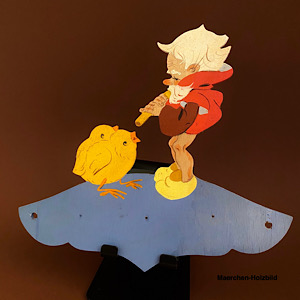
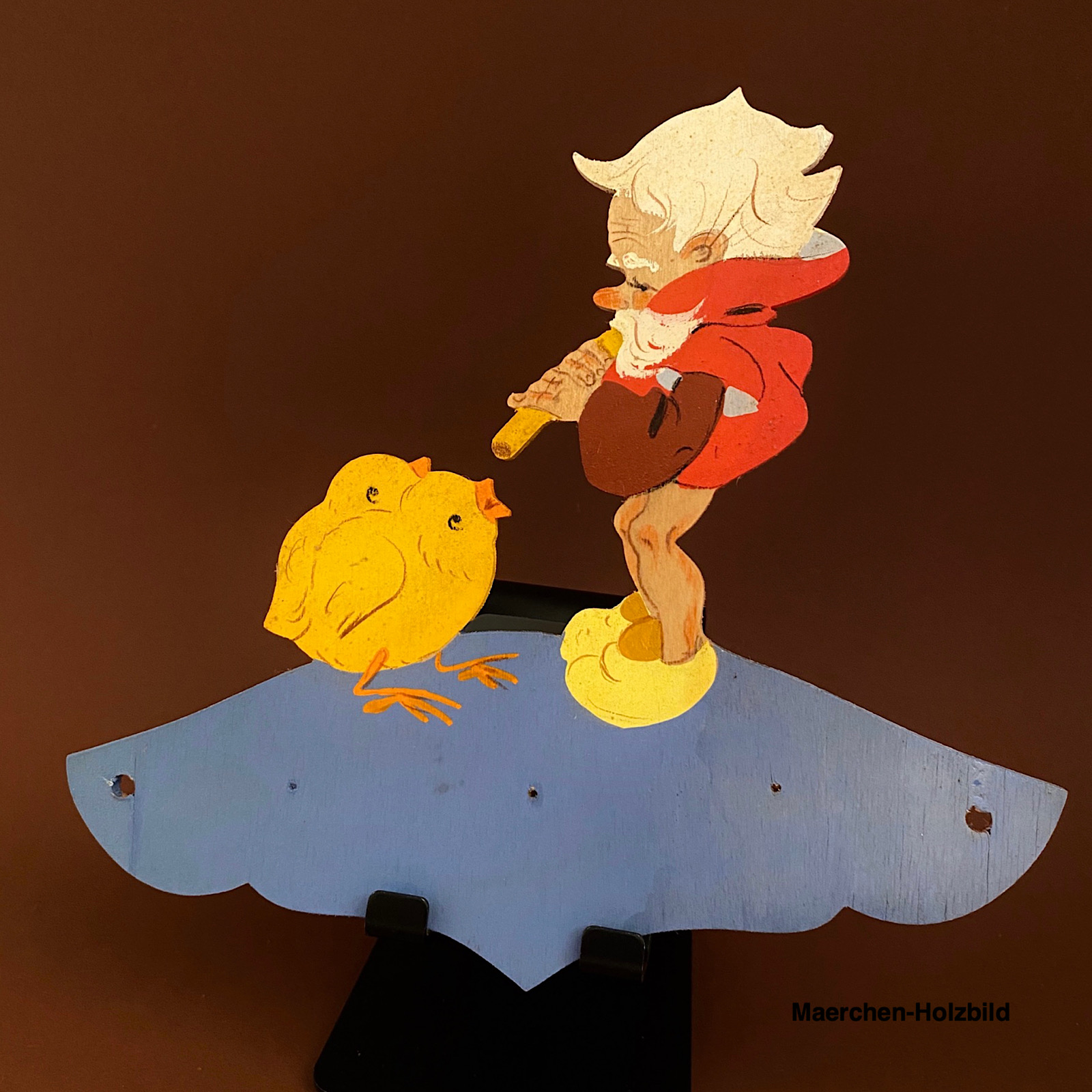
1950er Märchenholzbild German Wall Figure Ravi-Kunst Zwerg, Tiere 15 cm Höhe

1950er Ravi-Kunst: Kleiner Zwerg mit großen Küken, 15 cm Höhe, Schlüsselbrett, Handbemalt 🇬🇧 Midcentury Ravi-Kunst: Small Dwarf with Large Chicks, 15 cm Tall, Key Rack, Hand-painted, German Wall Figure

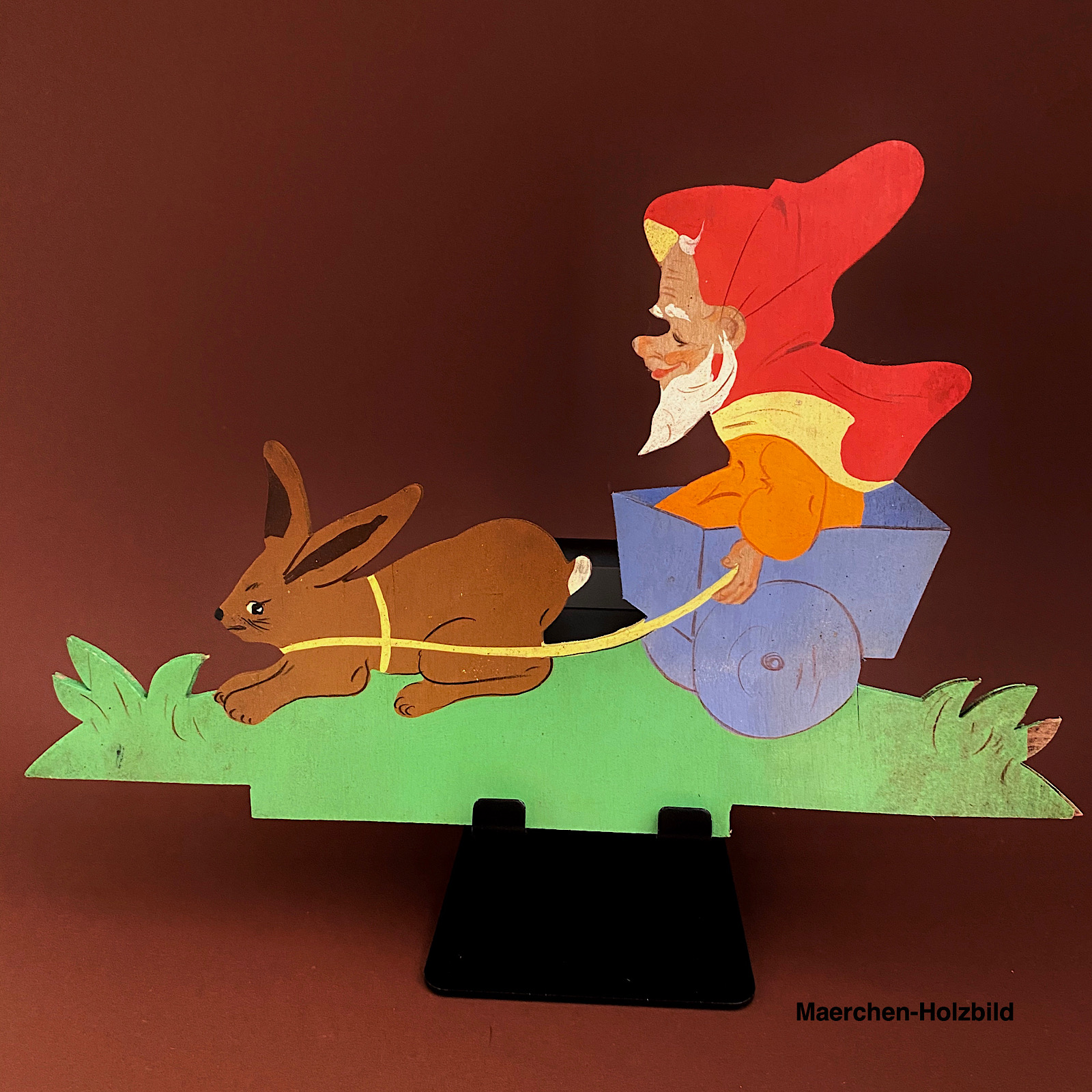
1950er Märchenholzbild German Wall Figure Ravi-Kunst Zwerg 14 × 23 cm

1950er Ravi-Kunst: Breitformatiger Zwerg mit Hasenwagen als Schlüsselbrett, 14×23 cm, Handbemalt 🇬🇧 Midcentury Ravi-Kunst: Wide Format Dwarf with Rabbit Cart as Key Rack, 14×23 cm, Hand-painted

1950er Märchenholzbild German Wall Figure Ravi-Kunst Zwerg 15 cm Höhe

1950er Ravi-Kunst: Kleiner Zwerg mit großem Enzian als Schlüsselbrett, 15 cm Höhe, Handbemalt, Märchen-Holzbild 🇬🇧 Midcentury Ravi-Kunst: Small Dwarf with Large Gentian as Key Rack, 15 cm Tall, Hand-painted, German Wall Figure