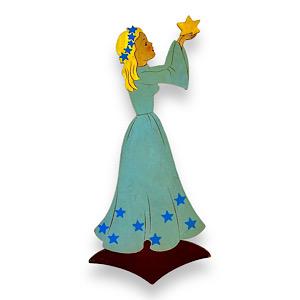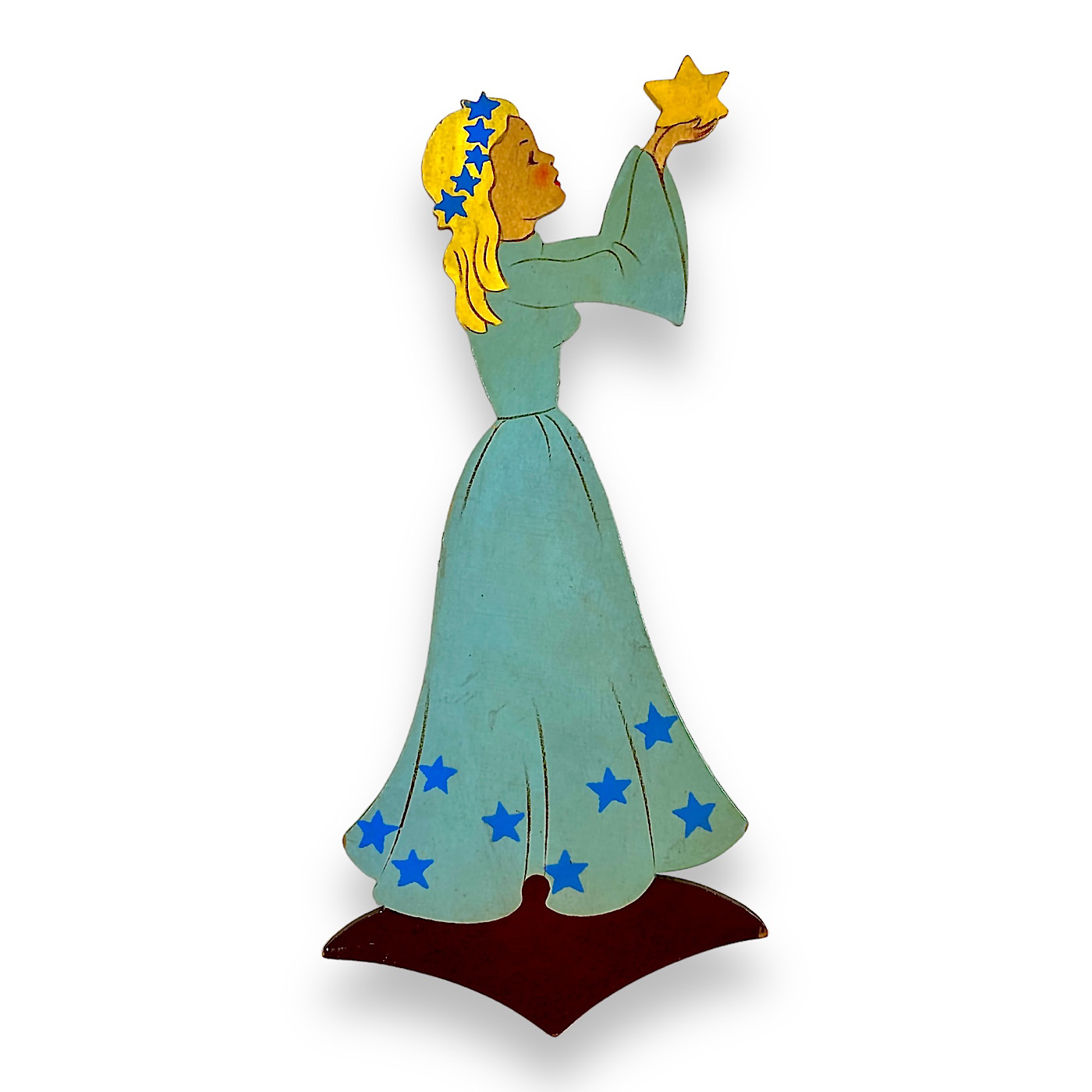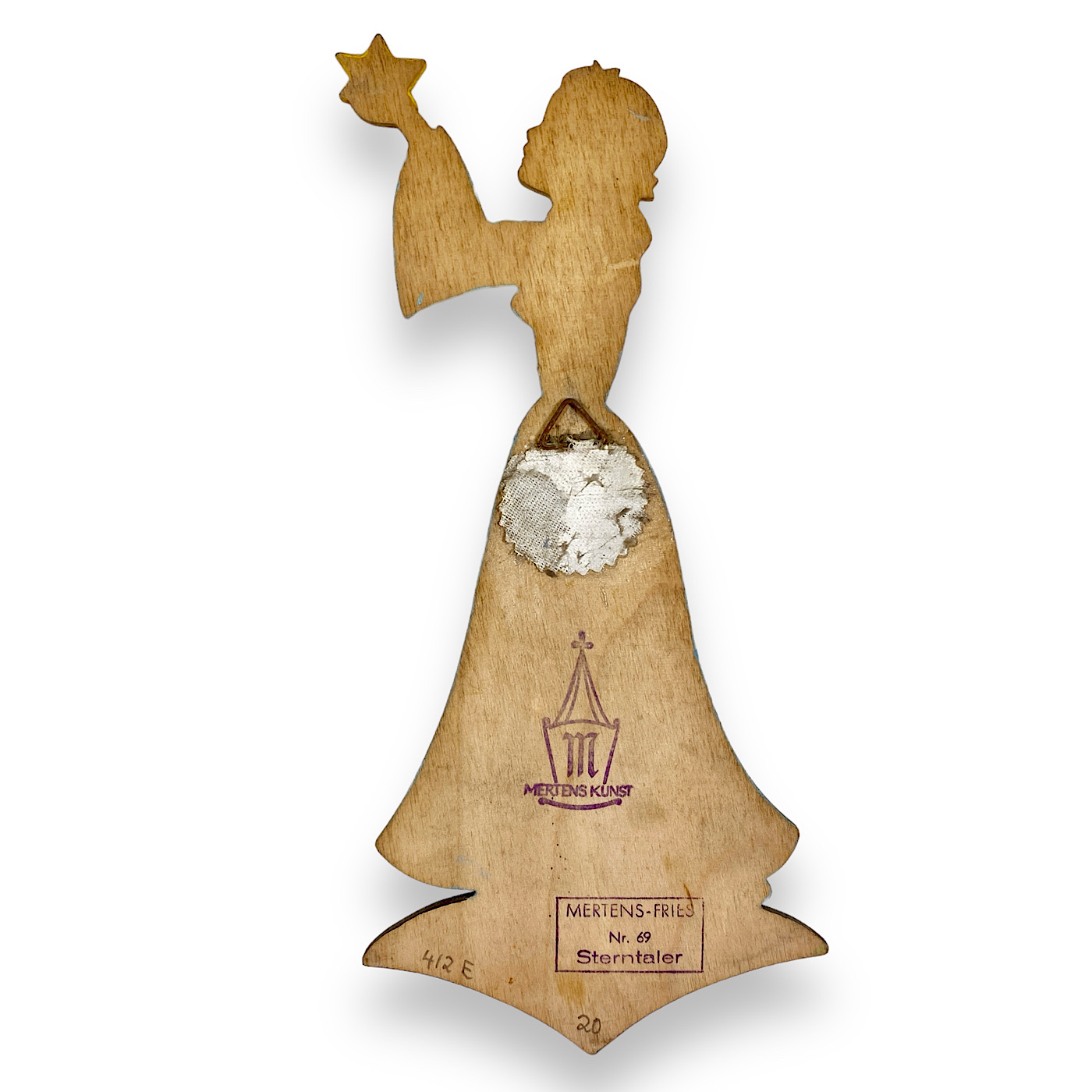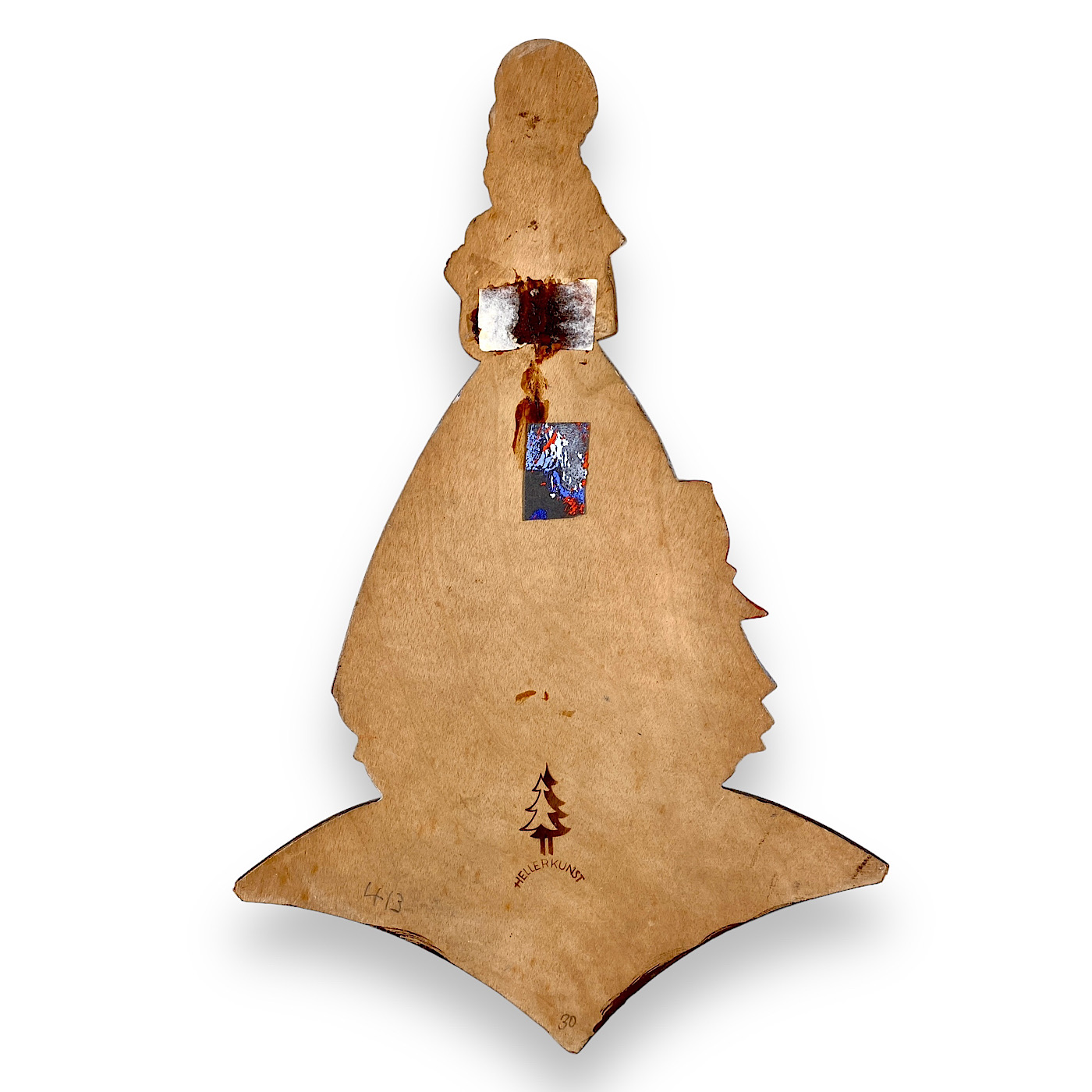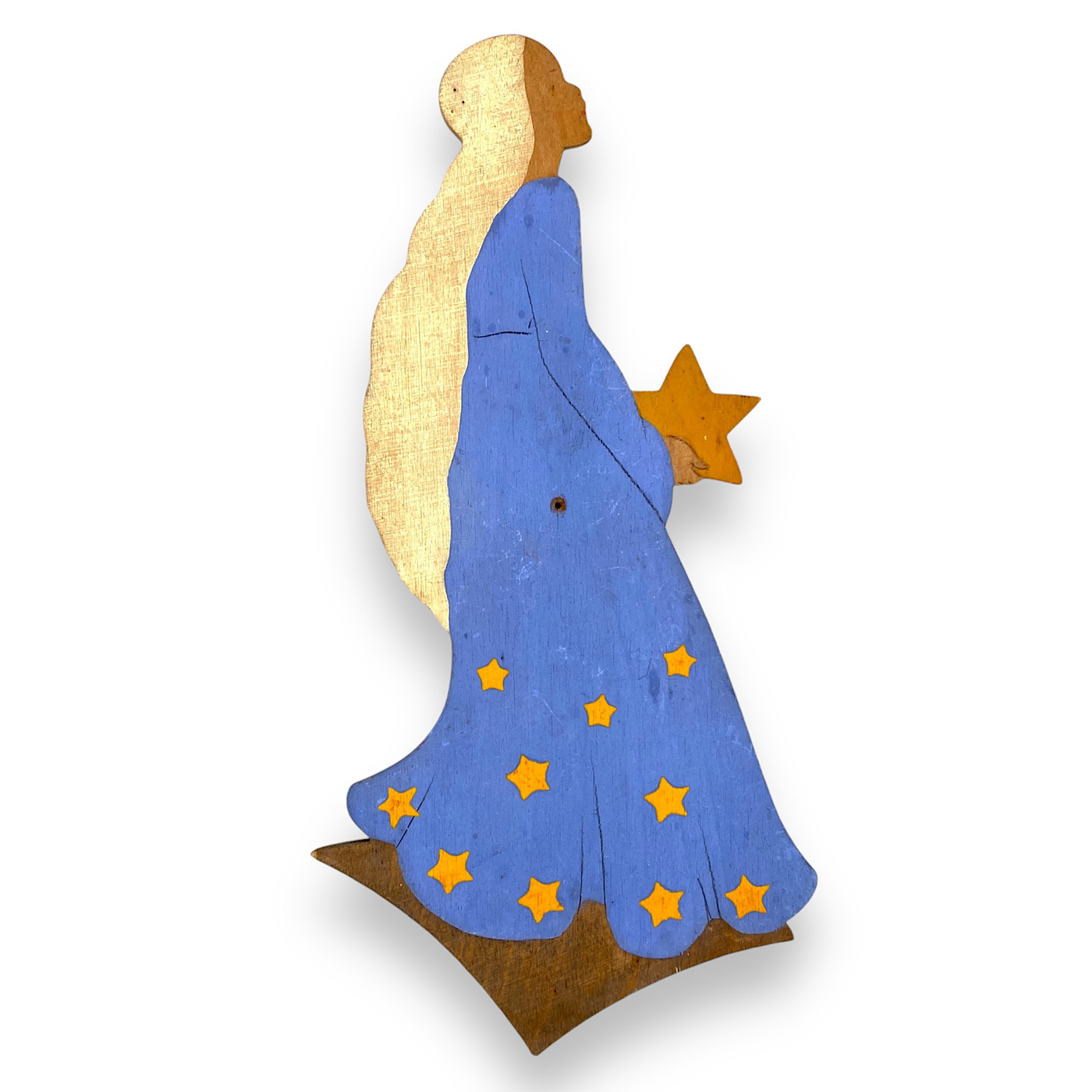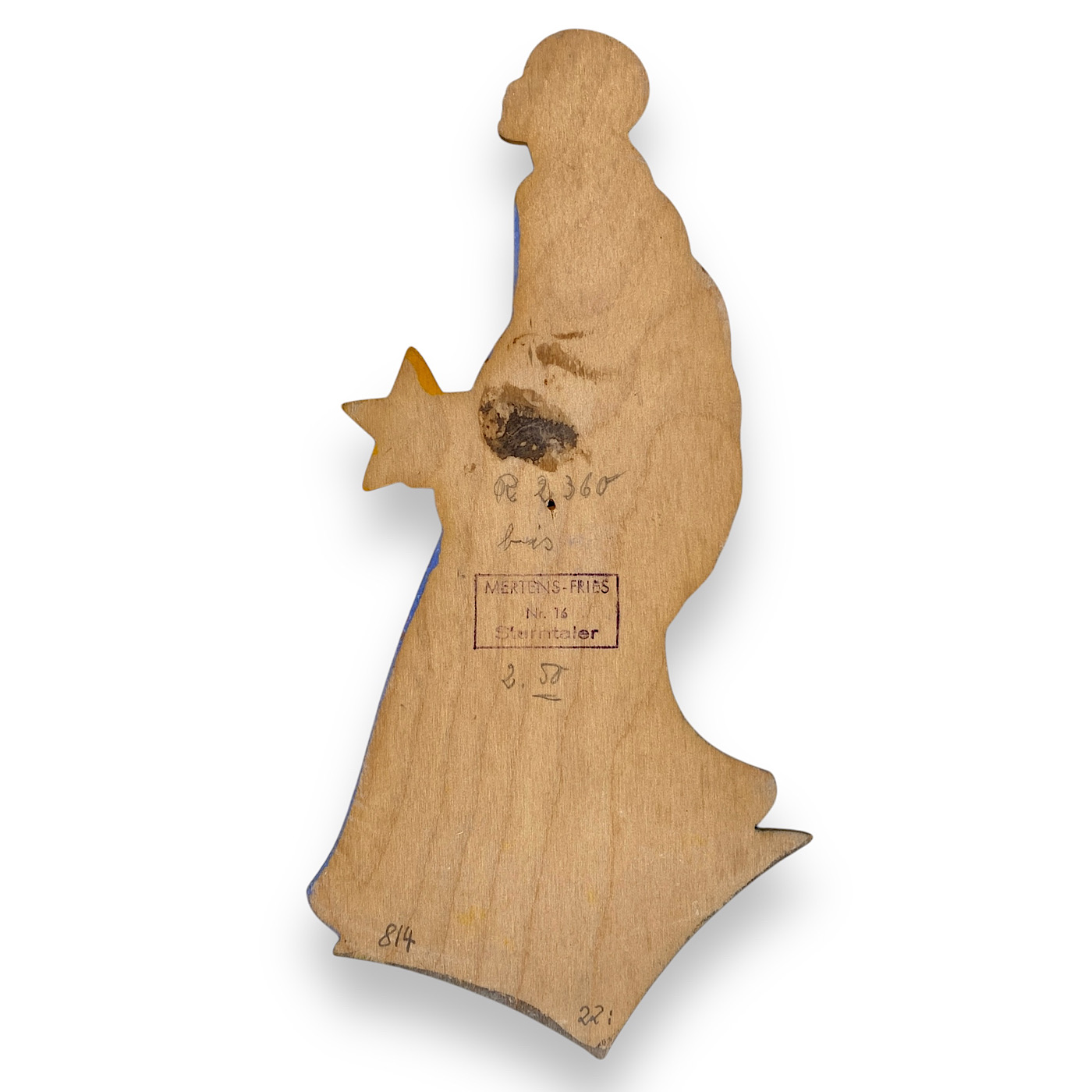
1940er Ravi-Kunst: Rosa Engel mit Wolke und großem Kometenstern 17 cm
1940s Ravi-Kunst: Pink Angel with Cloud and Large Comet Star | German Wall Figure Märchen-Holzbild


1940s Ravi-Kunst: Pink Angel with Cloud and Large Comet Star | German Wall Figure Märchen-Holzbild


1940er Eifelkunst: Die wilden Schwäne mit gelben Kronen, Handbemalt 23cm [EN] The Wild Swan Facing Left


EIFELKUNST, PROSPEKTE: Ich kenne bisher insgesamt drei Broschüren aus den 1930er-Jahren von Ilse Schneider, der Besitzerin und Künstlerin von Eifelkunst. Es handelt sich um zwei einfarbige Faltblätter und eines mit einer bunten Gänseliesel. Die beiden frühen Prospekte enthalten noch keine Telefonnummer. Im dritten Faltblatt, etwa von 1938, steht: „Eifelkunst-Werkstatt Schneider, Daun/Eifel, Inh. Ilse Schneider, Postschließfach 25, Telefon 209.“ In den Prospekten sind insgesamt etwa 20 verschiedene Motive von Märchen-Holzbildern zu sehen. Zu den frühen Wandfiguren gehören zum Beispiel Peterchens Mondfahrt auf der umgedrehten Mondsichel, Hänsel und Gretel im Teenageralter und das Rumpelstilzchen im zweifarbigen Cape.
🇬🇧 EIFELKUNST, BROCHURES: So far, I’ve found three brochures from the 1930s by Ilse Schneider, the owner and artist of Eifelkunst. Two are monochrome leaflets, and one features a colorful Goose Girl. The two earlier brochures don’t include a telephone number. In the third leaflet, probably from around 1938, it says: “Eifelkunst-Werkstatt Schneider, Daun/Eifel, Inh. Ilse Schneider, Postschließfach 25, Telefon 209.” The brochures display around 20 different German Wall Figure designs. Among the early wood plaques are, for example, Little Peter’s Journey to the Moon on an upturned crescent moon, Hansel and Gretel depicted as teenagers, and Rumpelstiltskin in a two-colored cape. (Buch/25)
1950s Mertens-Kunst Child: Porridge Girl “Noon“ with Stove | German Wall Figure Märchen-Holzbild


1950s Ravi-Kunst Child: Watering Can Girl with Black Bodice and China Hat | German Wall Figure Märchen-Holzbild


1940s Ravi-Kunst: Startled Umbrella Girl in Autumn Rain | German Wall Figure Märchen-Holzbild


1940s Ravi-Kunst Frühlingsgruß: Sitting Flower Hat Girl on Green Base | German Wall Figure Märchen-Holzbild


1930er Niedersachsen-Kunst: Originelles seltenes Tapferes Schneiderlein im grünen Frack, Handbemalt, 25 cm, Märchen-Holzbild 🇬🇧 1930s Niedersachsen-Kunst: Original and Rare Brave Little Tailor in Green Tailcoat, Hand-painted, 25 cm, German Wall Figure


NIEDERSACHSEN-KUNST: Dieser Hersteller hat in den 1930er und vielleicht auch noch in den frühen 1940er Jahren Märchen-Holzbilder produziert, aber auch Kindermotive und Zwerge. Sie wurden alle handbemalt. Auf vielen der Figuren kann man unten ein Grasbüschel sehen, und die Augen wurden mit braunem Bleistift gezeichnet, wie das auch bei Heller der Fall war. Vielleicht wurde die Werkstatt im Zweiten Weltkrieg ausgebombt? Ich kenne jedenfalls keine späteren Produkte dieses Herstellers. Weiß jemand mehr über Niedersachsen-Kunst? Bitte schreiben Sie mir!
🇬🇧 NIEDERSACHSEN-KUNST: This manufacturer produced many German Wall Figures in the 1930s and maybe in the early 1940s, too. Most of those wood plaques were the classic Brothers Grimm’s motifs, but there were also children and dwarfs. All of them were hand-painted. On many of their figures you’ll find grass sprouting at the bottom. The eyes were painted with a brown pencil, like Heller did, too. This producer doesn’t seem to have survived the Second World War, maybe they got bombed out, like other manufacturers, too. Does anyone know more about this wonderful historic manufacturer? Please get in touch! (Buch/25)
1930er Eifelkunst: Antiker schmaler Engel mit kleinen Flügeln und herabhängender Blume, Handbemalt, 25 cm, Märchen-Holzbild 🇬🇧 1930s Eifelkunst: Antique Slim Angel with Small Wings and Drooping Flower


ENGEL UND RELIGIÖSES: Religiöse Themen sind auf den historischen Märchen-Holzbildern kaum zu finden. Es gibt jedoch zwei Ausnahmen: Zum einen das Weihnachtsmotiv, insbesondere die Krippenszene von Bethlehem mit Maria, Josef und dem Jesuskind. Die zweite Ausnahme sind Engel – sie werden von vielen Menschen nicht zwingend mit Religion verbunden: Selbst viele Nicht-Religiöse schätzen Engel als geliebte Schutzsymbole.
🇬🇧 ANGELS AND RELIGIOUS MOTIFS: Religious themes are rarely found on historic German Wall Figures. But there are two exceptions: One is the subject of Christmas, especially the nativity scene with Mary, Joseph, and the baby Jesus in the manger. The second exception are angels, which many people do not necessarily associate with religion: Even non-religious people often cherish angels as beloved symbols of protection. (Buch/25)
Gisela Brüning mit Datierung 1945: Filigranes großes Trachtenmädchen mit Schneckenzöpfen und Strumpf-Bommeln, Handbemalt, 30 cm, Märchen-Holzbild 🇬🇧 Gisela Brüning, dated 1945: Delicate Large Girl in Traditional Costume with Coiled Braids and Sock Pompoms, Hand-painted, 30 cm, German Wall Figure


KLEINE MANUFAKTUREN: Es ist immer wieder erstaunlich, wie viele verschiedene Hersteller von Märchen-Holzbildern es im letzten Jahrhundert gegeben hat. Es waren sicherlich viele Hundert verschiedene. Einige hatten einen Namen auf der Rückseite, einige nicht. Zu den kleinen Manufakturen gehörten zum Beispiel Hosenmatz, Oltmanns, Heye, Handi, Pfeil, Rügen-Märchen-Kunst, Pavillon, Klara Luise Sturm, Gerheina und Silva.
🇬🇧 SMALL MANUFACTURERS: It’s always astonishing how many different manufacturers of German Wall Figures there were in the last century. There were certainly hundreds of them. Some had a name on the back, some didn’t. Examples of small manufacturers include Hosenmatz, Oltmanns, Heye, Handi, Pfeil, Rügen-Märchen-Kunst, Pavillon, Klara Luise Sturm, Gerheina, and Silva. (Buch/25)
1930er Unbekannt: Entfesseltes breitformatiges grünes Rumpelstilzchen auf rotem Sockel, 21×20 cm, Märchen-Holzbild 🇬🇧 1930s Unknown: Unleashed Wide Format Green Rumpelstiltskin on Red Base, 21×20 cm, German Wall Figure


MIT SOCKEL: Viele der frühen Märchen-Holzbilder aus dem letzten Jahrhundert hatten einen Sockel. Damit ist das untere Ende der Figur gemeint, das meist eine dreieckige Form hatte. Dieser Sockel ermöglichte das Einfügen der Figur in ein Märchen-Diorama (von Mertens auch „Fries“ genannt) oder eine Kindergarderobe, ohne dass von dem eigentlichen Motiv etwas abgeschnitten werden musste. Die meisten dieser Sockel waren braun, aber es gab auch bunte Sockel – allerdings seltener. Die frühen Bremer Stadtmusikanten von Mertens hatten zum Beispiel einen gelben Sockel, und auch einige der frühen Sieben Raben von Mertens hatten bunte Sockel in Blau und Grün. Auch Heller hatte manchmal bunte Sockel, beispielsweise bei den tanzenden Maikinder mit blauem Blumenkranz aus den 1930er-Jahren: Sie tanzen mitten in einem großen, frühlingsgrünen Sockel.
WITH BASE: Many of the early German Wall Figures from the last century had a base. This refers to the lower end of the figure, which often had a triangular shape. This base made it possible to insert the figure into a fairy tale diorama (also called a frieze) or a children’s coat rack without having to trim the actual motif. Most of these bases were brown, but there were also colorful ones, although they were less common. The early Bremen Town Musicians by Mertens, for example, had an orange base, and some of the early Seven Ravens by Mertens had colorful bases in blue and green. Heller also used colorful bases occasionally—for example, the dancing May children with a blue flower crown from the 1930s: they are dancing in the middle of a large green base. (Buch/25)